1784
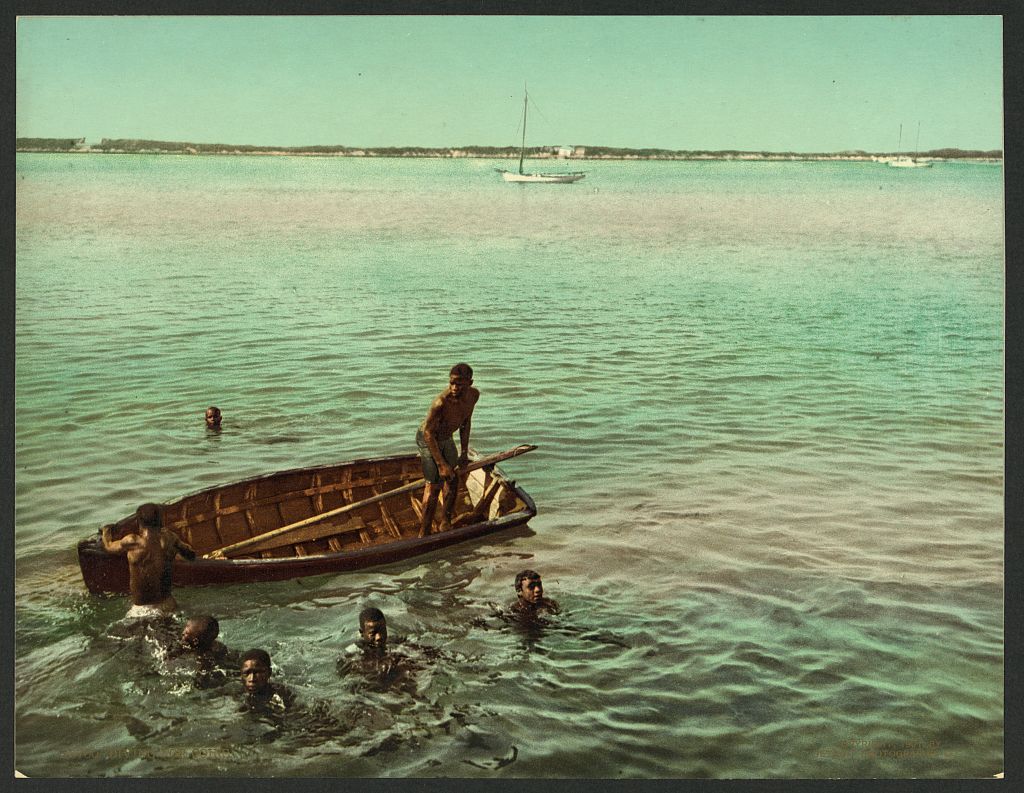
The Bahama Gazette, the first newspaper ever published in The Bahamas was owned and operated by a Loyalist, John Wells.
- The four paged Bahama Gazette was published twice weekly.
- The Bahama Gazette was used to publicize government abuses and aid the Loyalists in their fight for political rights.
- The Bahama Gazette was available by subscription to Loyalists who lived on the Out Islands.
1789
Alexander Cameron, a Loyalist, began publishing a newspaper called the Lucayan Herald.
1804
The Royal Gazette appeared and was edited by John Wilson, an Englishman from New York. The paper was owned jointly by the Wilson brothers.
1813
Neil McQueen bought the Royal Gazette thus amalgamating this newspaper with the Bahama Gazette. From then the newspaper was published as the Royal Gazette and Bahama Advertiser.
The Royal Gazette and Bahama Advertiser was published until 1856.
1829
The first political newspaper, “The Bahamas Argus”, an anti-emancipation paper.
1844
The Nassau Guardian was founded.
1887
The Freeman wrote about the plight of the blacks in the colony.
1892
The Telegraph Department (the forerunner of Batelco) was established.
Late 1890’s
The Watchman newspaper was founded.
1903
The Nassau Tribune was founded as a reaction to the Nassau Guardian and its lack of interest in the majority class.
1911
The first movie is shown in Nassau at the Royal and Imperial Theatres.
1920’s saw the introduction of feature columns to the dailies.
1926
The first Bahamian handbook – The Nassau Magazine & Journal.
1930
VIBAX becomes the Bahamas first broadcasting station.
1930
The first sound and colour “Movie” shown in the Bahamas.
1931
In a letter to the Editor of the Tribune newspaper, a regular patron at the Fotosho Theatre complains about being asked to change seats because he was in the ‘white’ area.
1932
Introduction of the first radio telephone allowing voice communication with the outside world.
1932
The Nassau Tribune began publishing as a daily, establishing links with Reuters and the Associated Press Caribbean and Latin American service.
1934
The Guardian became a daily.
1936
The implementation of Radio facilities (May). Formal broadcasting begins.
1937
September 30, fire destroys the Nassau Theatre.
1937
Bimini Bugle, the smallest newspaper, Alice Town, Bimini.
1937
Call letters ‘ZNS’ – Zephyr Nassau Sunshine adopted.
ZNS radio service was begun to give weather information to Bahamian seamen and yachtsmen who were beginning to discover the beauty and charm of these islands
Radio you might say helped more than any other medium to make the people of the Bahamas more cohesive.
1945
First Out Island remote broadcast from Harbor Island to Nassau.
1946
ZNS’s frequency changed to 1540 KHZ
1949
Sidney Poitier made his motion picture debut in the movie “No Way Out”.
1949 – Board of Education began broadcasting locally-produced educational programmes.
1950
In January construction began on the building of a new theatre for the Southern District. The owner, Mr. Percy Pinder who also owned the Rainbow Gardens Theatre in East Street South.
1950 – ZNS begins commercial broadcasting.
1950’s George Symonette, The King of Goombay, recorded a number of calypso albums. His 10th Anniversary album featured songs such as “Sail on the Sloop John” “Peel, Peel, Peel De Banana” “Delia Gone” “Uncle Lou” and “The Goombay in Exuma”.
1958
Blues scholar Samuel Charters, a professor of music at the University of California, made a recording of songs by Bahamian musician Joseph Spence called “Music of the Bahamas” Volume I.
1963
Sidney Poitier won the Best Actor Oscar for his role as Homer Smith in the 1963 movie “Lilies of the Field”.
1963
Sidney Poitier won the Best Actor Oscar for his role as Homer Smith in the 1963 movie “Lilies of the Field”.
1962
ZNS-2 is established.
1970
The Fergusons of Farm Road, Bahamian radio soap opera written by Jeanie Thompson.
1970
Tony McKay made his first recording with Mercury Records. The ‘Obeah Man’ albums received high ranks from Billboard and was rated #1 in Brazil, Honduras and Russia.
1971
“Funky Nassau”, funk/disco record track by the Beginning of the End was made. The record/album became a “dance floor” hit in 1974.
1973
ZNS-3 Radio Bahamas Northern Service begins its operation in Freeport.
1976
Opening of the new Sunshine Twin Theatre on Blue Hill Road.
1977
Television programmes start officially on Channel-13 (July 10th).1990
Television service to Freeport commences via CATV cable system.
1993
Prime Minister Hubert Ingraham announces breaking of ZNS’ broadcasting monopoly. (January 8th)
1993
Private Broadcasting begins.
1993
Private Broadcasting begins.
1994
Love 97 Radio Station.
1995
Cable Television in New Providence and other islands of the Bahamas is launched.
1995
More FM (94.9) Radio Station.
2002
Island FM (102.9) Radio Station.

